6 Challenges Singapore Face
Recently, a trip to The Future of Us Exhibition got me thinking of how will Singapore be like during SG100. The exhibition portrayed a very dynamic yet unrealistic future of Singapore. Yet as we take a moment to look back at the past 50 years of transformation, the future that we dream of seems relatively reachable. This article will focus on challenges Singapore might face on its way to SG100.
Ever since its inception into independence in 1965, Singapore transformed from a third world country to a first world country in a short period. Despite her phenomenal growth, Singapore has many limitations due to her size and the lack of resources. These problems that will be raised are:
- Income Inequality
- Natural Resources and Environment
- Competitors with Dynamic Hinterlands
- Changes in Economic Landscape
- Ageing Population
- Security
- Income Inequality
Where capitalism exists, there is bound to have income inequality. This is a worldwide phenomenon inherent in developed countries that the respective governments have been tackling for ages. Though it can be reduced, income inequality cannot be eliminated without an adoption of extreme communist governance. Even then, corrupted officials inherent in a communist-like country where the top ranking officials have the last say will stretch the inequality. Whether intended or not, the result of great income inequality as seen in Singapore could result in the lower income citizens not being able to afford houses without government assistance.In February last year, the Strait Times reported that Singapore’s income gap, as measured by the Gini coefficient, is one of the widest among developed countries at 0.478. The Gini measures how income is distributed in a society. The closer the number is to 1, the more unequal the distribution of income is. As we approach SG 100, there are many factors, which could potentially distort the income inequality in Singapore. With economic power shifting from the west to Asia, opportunities are abundant and people who could benefit from it are the entrepreneurs and the educated ones. Unsurprising, the rich gets richer and the poor gets poorer in terms of real income. As such, Singapore must shift its focus from growth to prosperity, from high government expenditures to a higher redistribution of income. Only by just redistribution of income and an anti-corruption education system that grants entry of students to elite schools based on results and not donations, can Singapore truly progress in a rapidly changing world.
- Natural Resources and Environment
Despite being a country without natural resources back in 1965, Singapore has managed to self-sustain its resources through agreements with P countries such as the water agreement with the Federation of Malaya that enables Singapore to draw up to 250 million imperial gallons per day from the Johore River through 2061. As Singapore progresses forward, it needs to innovate ways to self-sustain its water supply…Besides creating water supply, Singapore has to innovate ways for a larger population given its limited space and to also maintain its reputation as a clean and green nation. The topic on global warming has been a hot one at the 2015 United Nations Climate Change Conference (COP 21) that was held in Paris. With that in mind, there are opportunities created for Singapore (known for its clean environment) to be the leading innovator in reducing greenhouse gas emissions. In stimulating research and development, government ought to recognise companies that puts in the effort to go clean and green. The goal towards a cleaner and greener nation would also reduce government expenditures on unnecessary activities that could be avoided if a cleaner approach is adopted.
- Competitors with Dynamic Hinterlands
As economic development progresses in India and China, Singapore has to remain competitive to grab a share pie of the logistics market, especially in the maritime sector. Already, the Pearl River Delta (PRD) Economic Zone and Greater Mekong Sub region (GMS) Economic Cooperation Program (serving immediate population of 326 million) are in progress which benefits Hong Kong and Bangkok respectively in terms of connectivity and economic efficiency in cross border movement and integration of national markets. In order to compete for a larger pie of the market, Singapore has to improve its relationship with neighboring countries such as Malaysia and Indonesia. Besides improving ties with neighboring countries Singapore has to step up its game in terms of the expansion of local Small and Medium Enterprises (SMEs). In 2010, the government set a target to produce 1,000 global competitive companies with revenues exceeding $100 million by 2020.Singapore Business Federation (SBF) S.S. Teo commented, “There are only 300 so far. We don’t think this target can be reached.”Clearly, there aren’t enough Singapore companies going overseas. If we want to compete internationally, Singapore has to create a supportive environment that encourages local SMEs to service outsourced work of Multi-National Corporations (MNC).
- Changes in Economic Landscape
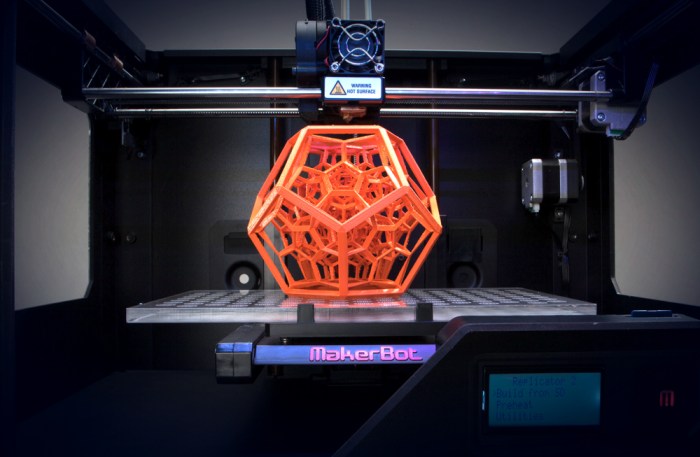
One thing history has taught us, technology has advanced so rapidly that it seems like a fantasy when you compare the present and the past. From the United Kingdom Industrial Revolution to Henry Ford Revolutionising the automobile industry, the economic landscape shifted from labor intensive to manufacturing intensive and now, to a knowledge based economy driven by innovation, high tech manufacturing and high value services. Every milestone it seems, there isn’t any more possibilities to improve the process. But time and again, research and development has proved us wrong in many ways. Currently, 3-D printing has become increasingly popular and researchers around the world are trying to expand on it. In a sense, 3-D printing will create a paradigm shift in the economy firstly, the creation of high paying jobs such as data analyst, cloud specialist and digital marketing professions.Secondly, the focus on technology professions will change the education system. In order to adapt, tertiary institutions will have to produce highly skilled (in the technology field), versatile and creative students, shifting the focus on academic to a more innovative learning that spur students to think out of the box. This could result in more R & D scholarships not only from government entities but also private enterprises.With the rise of emerging economies in Asia (particularly India and China), competition will intensify. Being the next generation leaders, the Y Generation cannot afford to be complacent and instead, strive to be the leading innovator in the development of technology.
- Ageing Population
Contradicting how Singapore is facing an ageing population and yet citizens strongly oppose to the target of 6.9 million people in 2030. Despite government efforts to encourage marriage and births, Singaporeans are unwilling to accommodate. Instead of focusing on problems that can’t be controlled, government should instead focus on problems that can be. One major problem that ageing population produces is that elderly folks are being shun away from work opportunities because of the fact that they are old. Instead of rejecting elderly, enterprises should provide the opportunity for them to stay integrated in the workplace. Only then, can they be able to share experiences and expertise with the respective enterprises to progress further. Government policies need to move away from the fixation that reducing old-age dependency ratio is good and rethink on the assumption that old age brings a counterproductive stereotype that it is negative.
- Security

The notion that Singapore is a very safe place and that National Service shouldn’t be compulsory because of its safety should be forgotten. Firstly, Singapore is a very safe place because of National Service. Secondly, being oblivious to current affairs and thinking that we are in a very safe nation is just plain complacency. At first glance, it would seem that China and Russia are against the United States and its allies in terms of economic power when China backed Russia with a $400 billion gas deal after Russia being slammed with sanctions by the U.S. Not forgetting the tensions arising from the conflicts in the South China Sea, and the recent increase in terrorism threats such as the Paris bombing.Given the complexities of current situation, Singapore should remain neutral and navigate wisely the contests of bigger powers to maintain sovereignty. With limitations in manpower in the defense field, Singapore must tap on high-technology equipment to compensate for the lack of soldiers. Investments in defense purposes must not be compromised just for economic growth.
Our forefathers came to Singapore and worked their ass off just to secure a better future for the next generation to live in. We must not be confined to the notion that the Y generations are the inheritors of the results our forefathers have strived to produce. Instead we must always remember the transformation they brought to us and uphold the values imparted by our past generation to bring greater values to Singapore. People say this is the time that we enjoy the fruits of their labor. But no, this is the defining moment where breakthroughs happen in a resourceful and globally connected world.


 baatbaakman.blog