As globalization progress, the economy of countries are becoming more inter-connected. Manipulation on currencies and capital controls to drive up exports are increasingly common in the modern world. These are all by-products of the movement of capital within and between countries. So what exactly does Capital Flow mean? It simply refers to the movement of money for the purpose of investment, trade or business production. Thus, capital outflows refers to domestic purchase of foreign assets while capital inflows refers to foreign purchase of domestic assets. Take for example, China’s capital outflow to India stands at an estimated USD$30 billion means that China has purchased USD$30 billion worth of assets in India.
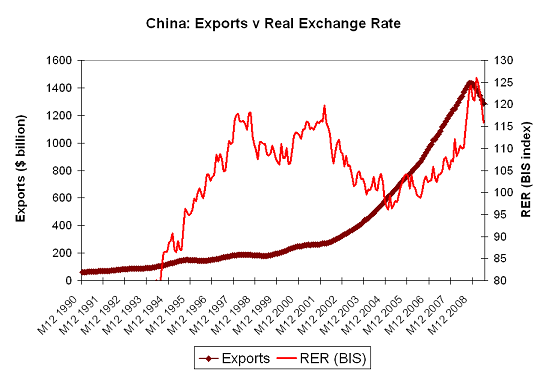
In today’s world, many governments around the world uses capital control (to limit or redirect capital account transactions) to manipulate the country’s economy. There are many forms of capital control such as taxes, price or quantity controls, and restriction on capital inflows and outflows. By restricting capital outflow (domestic purchase of foreign assets), countries are able to increase revenue in 2 ways. First, by circulating capital in the domestic economy, it channels investment locally from domestic investors thus facilitating taxation of wealth and interest income. Second, as currency circulates in the domestic economy, it causes inflation to increase as a result of higher demand on goods and services generating more revenue for the country. When a country’s capital outflow exceeds that of it’s inflow, the foreign currency tends to appreciate while the domestic currency tends to depreciate. By depreciating the domestic currency, the country is able to boost exports as a result of cheaper goods caused by a lower currency. Such as China’s plan to depreciate its currency to project a higher growth rate as seen from the chart.
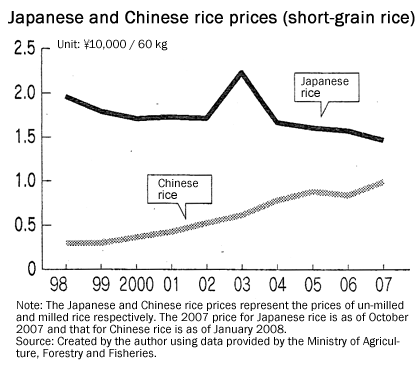
The other commonly used form of capital control is the implementation of taxes to protect domestic firms from competitors such as large firms. The reason for this was because small, domestic firms are less efficient than larger, foreign firms and thus unable to compete with them, the smaller domestic firms have to be protected from international competition through the use of trade barriers. The problem with this reasoning was that more often than not, these protected industries never grow up and end up seeking perpetual protection. As a result, highly taxed goods are often higher as the trade barriers could prompt producers to create a mini monopoly as in the case of Japan’s high duty on imported rice. The high duty on imported rice in Japan has made Japan’s rice pricier as compared to that of China’s.
With all that said, are capital controls even effective at all? Between 1990 to 1996, Thailand’s investment rate topped the region as a result of huge overflow of capital and domestic investment. Stock prices rose by around 175% and 395% in the property sector. However, the booming era did not last for long. Soon, global demand for semiconductor (one of Thai’s major exports ) fell considerably in 1996 due to increased competition from China and the appreciation of the dollar in 1995 slowed the Thai economy down. As the prospect of the Thai economy grew dimmer, foreign investors started selling Thai assets while speculators kept taking out the dollars in the Thai economy which led to a massive devaluation on the Thai Baht and assets that started the 1997 Asian Financial Crisis. Had there been capital controls put in place, the situation might not turn out that bad. On the other hand, controls on inflows have been found to be more effective than those on outflows as there is less incentive to evade controls on inflows.
Generally, the health of an economy essentially depends on how well the economy is managed towards achieving a healthy balance of trade and capital flow. If the balances could not be achieved, it is very hard to sustain the economy. As in the case of the Thai economy, it did badly in managing its balances and was too reckless in capital flow management which resulted in an imbalance of bank balance sheets of the nation’s financial institutions. A look at historical economic failures could tell us the importance in Capital Movement. While there are still lots to explore in the topic of Capital Movement and Control, I hope the basic introduction provided will suffice to continue your pursuit of a deeper understanding in this particular topic.


 baatbaakman.blog