In light of the upcoming General Election for Singapore, many political parties are campaigning to entice citizens to vote for them. Among a bundle of policies being promoted by different parties, one of which is the implementation of a minimum wage of $1,000 by the workers party.
“Such a move would not only help the poor but also spur productivity as it may put pressure on employers to invest their capital in their training to increase the productivity of the lower-paid workers.”
The minimum wage is specifically intended to take aim at the inherent imbalance in power between employers and low-wage workers that can push wages down to poverty levels. Brilliant isn’t it? The low-wage workers could now have a higher purchasing power than before! Yes it may be true to a certain extent from the low-wage workers point of view but from a different point of view, could this increase in minimum wage be sustainable?
From the private businessmen context, the increase in wages forcefully can only result in one thing, higher operating cost. With higher operating cost, business faces 2 options, to reduce the number of jobs or to increase the price of the product. Either way, the former hurts the economy while the latter could chase consumers away. In the former, human resource management might be tighter than before to fight the increasing cost created by the minimum wage law. This would mean lesser people being accepted for the job. A common problem found in countries with multi-racial citizens such as the United States of America, is that more people competing for lesser jobs could result in racial discrimination. Or as what Milton Friedman described: “The most anti-black law on the book of this land is the minimum wage law.”
On the other hand, when government pays its employees higher wages, these higher wages are at the expense of the taxpayers. But when workers get higher wages and more civilized working conditions through the free market, when they get them by firms competing with one another for the best workers, by workers competing one another for the best jobs, those higher wages are at nobody’s expense. They can only come from higher productivity, greater capital investment and more widely diffused skills. There’s more for the workers but there’s also more for the employer, the investor, the consumer and even the taxpayers. That’s the way the free market system distribute the fruits of the free market among to all the people.
Take a look at countries with minimum wage laws around the world. You could see that majority of those who adopt a minimum wage policy tends to have a larger unemployment rate.
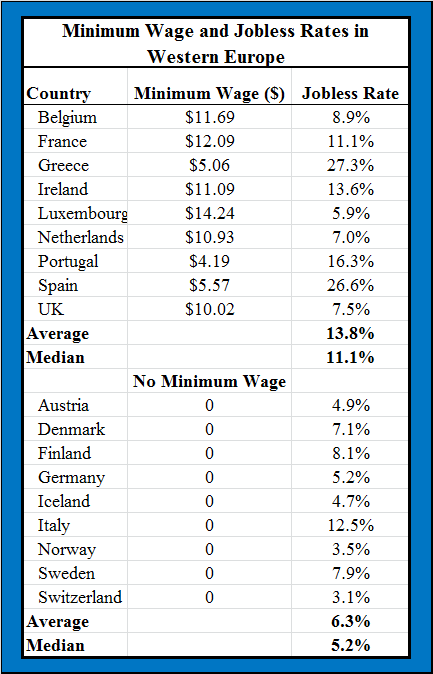
Of course, it’s not to say that having minimum wages for the low-skilled workers is bad but the effectiveness of such a policy could only be reach when it is done at nobody’s expense. With that said, I’m not discriminating any political parties in Singapore (I’m not yet legal to even vote) but rather, to advocate the importance in doing your research in electing the people who will be in charge of our nation’s prosperity as well as social conditions.
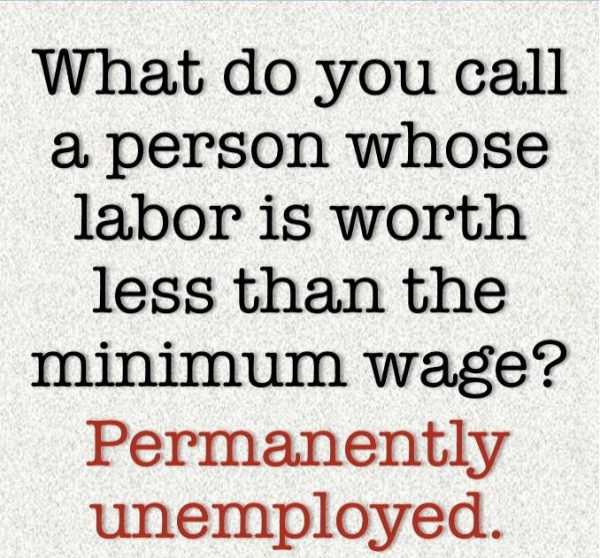
Lastly, here’s a joke for the day, enjoy!


 baatbaakman.blog