Hey I’ve successfully completed my military training phase! So… throughout my 72km route march, a thought occurred to me. What happens if Greece defaults on its debt? It seems pretty bad IF the EU actually allows it to happen, but what if… it really does happen?
As the deadline for the repayment of Greece debt is nearing, political tensions among the European countries are piling up. For months, German Chancellor Angela Merkel has sought to persuade Greek Prime Minister Alexis Tsipras to engage in austerity and economic overhauls as a requirement to receive further financial aid. The anti-austerity leftist government has rejected Ms. Merkel’s suggestion and in the process shutting down the opportunity of a financial aid from the Eurozone.
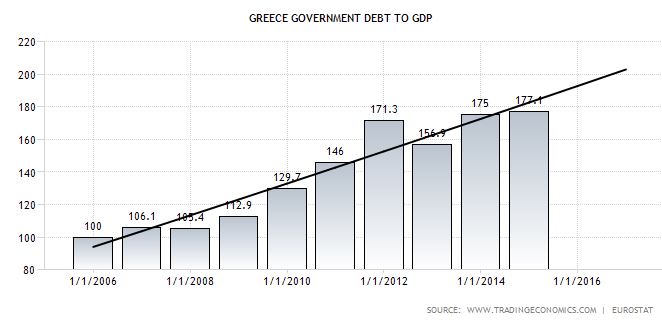
Why does Greece have so much debt?
After an attempted government coup in the 1970s, Greece became politically and economically unstable. Nevertheless, after a profit spike in the 1990s, they met the fiscal requirements to join the Eurozone in the year 2000. This event tied Greece to stronger economies like Germany and France, which opens the path to low-interest loans. Public spending and government borrowing soared, even as Greece’s debt remained higher than the Eurozone average in the 2000s. When the recession of 2008 hit, Greece spiraled into a debt crisis. And in 2009, it was revealed that Greece had been falsifying reports on their debt for years. When the actual statistics was exposed, Greece’s national credit rating took a dive, which in turn, caused investors to hike up interest rates. Greece has been on the brink of bankruptcy ever since.
What happens if a default occurs?
Should Greece default on its debt, it is highly likely that it will exit the Eurozone, leaves the euro and adopts its former currency, the Drachmas. Following which, there will be a flight of capital with people pulling money out of Greece causing currency devaluation and assets prices plunging. Thereafter, the government might step in to manipulate the economy through perhaps Quantitative Easing to sustain the prices of the assets and the adoption of capital control to prevent bank runs and rapid devaluation of the currency. If mismanaged, the economy could dive into a situation of hyperinflation like that of Argentina’s and could further trigger a social unrest among citizens.
Why don’t the Greeks take up the bailout deal?
As mentioned earlier, part of the deal’s requirement was for Greece to accept austerity measures. Such measures as believed by the Greeks, will further deepen the debt crisis and impoverish the people as it would drive up unemployment and shrink Greece’s economy and tax base at an accelerating pace, placing the possibility of the repayment of debts in jeopardy.
While it is estimated that a Grexit would not affect the Eurozone significantly (2% of EU economy), the EU’s reputation is at stake with the image that it might do the same to the other members, such as Portugal who frets it could be next. Apart from that, with Greece departure from the EU, it could potentially create a new relationship with Russia. Already, Russia has invited Greece to join the $100 billion BRICS New Development Bank as its sixth member. At such a vulnerable time for Greece, the collaboration between Greece and Russia could only boost the political influence of Russia in the region.


 baatbaakman.blog